
When Intelligence Becomes Abundant, Stewardship Matters More

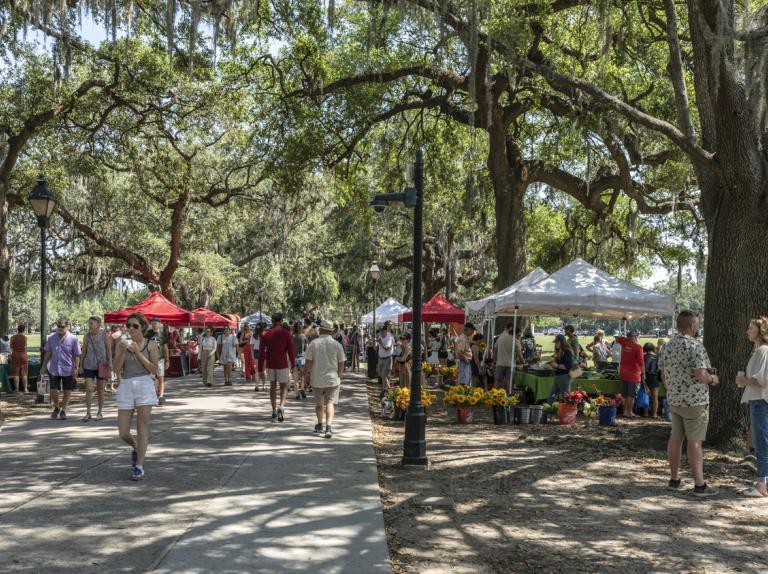
The rise of AI will give destination organizations unprecedented access to information, but human judgment, relationships and stewardship become even more important as intelligence becomes abundant. Destination leaders should use AI to better understand interconnected changes across the experience ecosystem while remaining focused on purpose, responsibility and what matters most to the people and places they serve.
Destination organizations are understandably spending a lot of time thinking about artificial intelligence.
How will people discover places? How will trip planning change? What happens when AI agents begin making choices on behalf of travelers? How will our organizations communicate, operate and make decisions differently?
All of that matters.
But I think there is another question worth bringing into the destination stewardship conversation:
What happens to the places we help steward as intelligence itself becomes more abundant?
Bill Gates recently described the emerging AI era as a period of extraordinary possibility and disruption across many parts of society at once. For destination leaders, that matters because those changes eventually become real in particular places.
This is where the AI conversation starts to move beyond organizational adoption.
AI will not only change how destination organizations work. It will influence the wider experience ecosystem around us: businesses, mobility, employment, culture, infrastructure, community life, visitor behavior, energy use, storytelling and countless other parts of place.
And those changes will not happen neatly, one at a time.
They will interact.
A shift in employment can become a housing issue, a small-business issue and a community well-being issue. A new technology investment can become an energy, water, land-use and economic-development conversation. AI-mediated travel can affect which businesses are surfaced, what experiences visitors discover and which stories about a place become more visible.
The destination organization may only touch part of that picture.
The place experiences all of it.

That feels increasingly important to me.
Most of our institutions are designed around particular responsibilities. Tourism understands one part of the place. Economic development understands another. Local government, transportation, cultural organizations, environmental organizations, universities, residents and businesses each hold different pieces of the story.
That specialization is necessary.
But an experience ecosystem does not behave according to organizational charts.
Visitors and residents experience the intersections.
So perhaps one of the opportunities of the Age of Intelligence is not simply giving every organization better information about its own work. It is helping us develop a more connected understanding of what is happening across the place.
From AI Capability to Stewardship Capacity
I have been thinking about this through the idea of stewardship capacity: the ability of a place and its stewards to understand change, coordinate around what matters and act intentionally over time.
AI could expand that capacity in meaningful ways.
It can help destination organizations follow larger volumes of information, maintain memory, recognize patterns, compare conditions and connect things that have historically lived in separate reports, conversations or institutions.
That opens an interesting possibility.
A destination organization could develop a much richer, more continuous understanding of the experience ecosystem it is helping to steward: not only visitor behavior and economic performance, but changing community conditions, cultural shifts, infrastructure pressures, accessibility, environmental concerns, business realities and the experiences of people who live in the place.
Not because the destination organization owns all of those issues.
It does not.
But because destination stewardship increasingly requires enough awareness to understand how those issues relate to one another and how they may affect the experience ecosystem over time.
That brings us to an important distinction.
Intelligence helps us understand what is happening. Stewardship helps us determine what matters and how we should respond.

AI may become extraordinarily capable at helping us understand what is happening.
It can help us see change sooner. It can surface connections we might miss. It can remember more than any individual team ever could.
But there is still a responsibility that sits with the people and organizations stewarding the place.
What deserves attention?
Which perspectives are missing?
What needs protection, and where are the tradeoffs?
What kind of experience ecosystem are we trying to strengthen—and what responsibility do we carry as conditions change?
When Scarcity Changes
For a long time, one of the constraints on destination organizations has simply been the ability to know enough.
Research takes time. Good analysis can be expensive. Institutional memory walks out the door when people leave. Information sits in different departments, databases, studies and organizations. By the time we understand one set of conditions, the place may already be changing again.
AI begins to alter some of those constraints.
If information, analysis and pattern recognition become much more accessible, then perhaps scarcity begins to shift.
The harder part may no longer be gathering more intelligence. It may be maintaining context, exercising judgment, understanding what matters, building relationships across different perspectives and recognizing when something important is changing before we have a perfect dataset to prove it.
Then comes the harder question: What are we responsible for doing next?
That is why stewardship becomes more important as intelligence becomes more abundant, not less.
The goal for a destination organization should not simply be to become more AI-enabled.
The more interesting opportunity is to become a more capable steward because these new forms of intelligence exist.
Staying in Relationship With Place
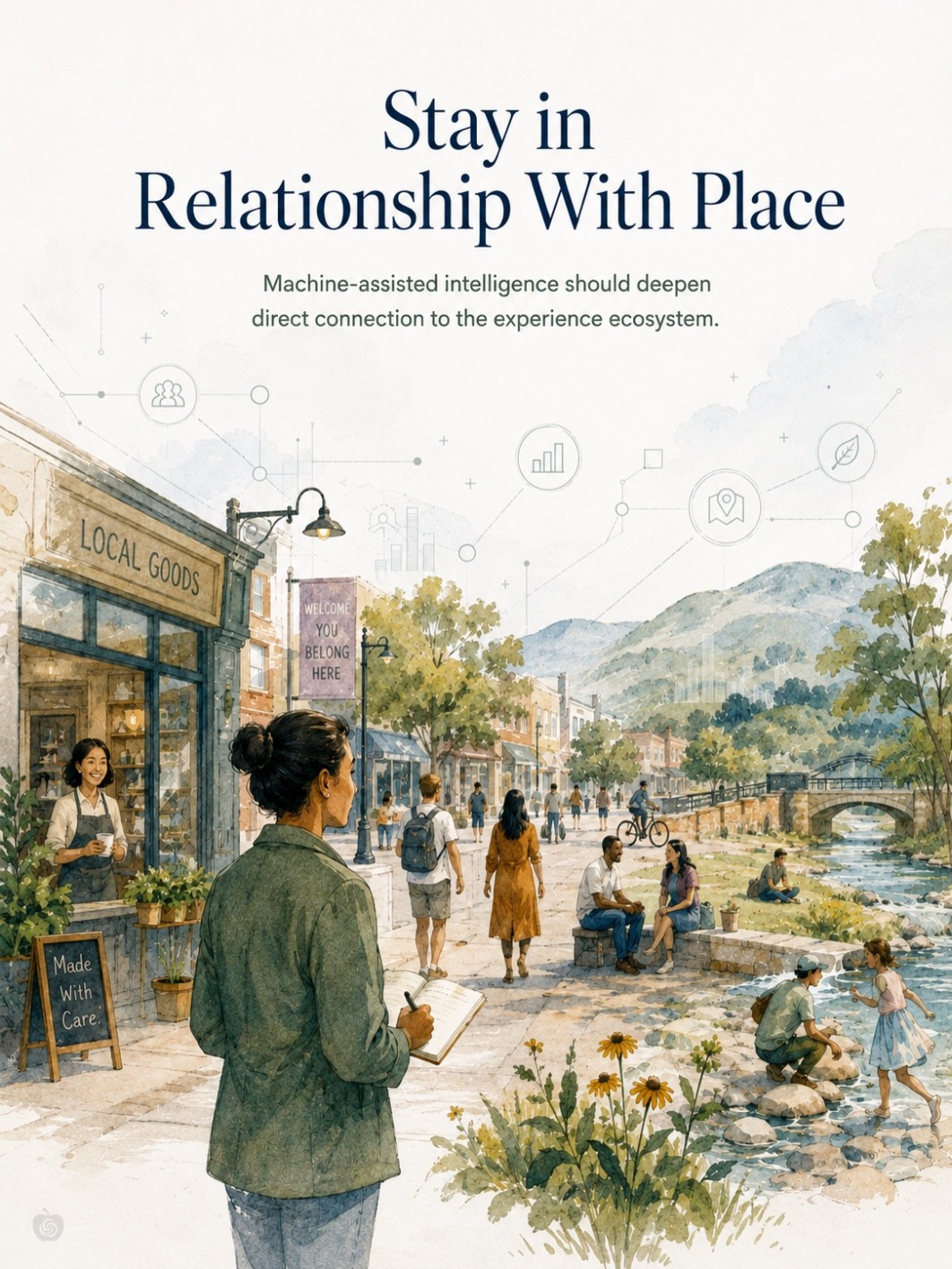
As more information about places becomes machine-mediated, destination organizations cannot afford to become separated from the actual experience ecosystem they are trying to understand.
Data matters.
Research matters.
AI-assisted intelligence will matter enormously.
But so does walking the place—talking with people, listening, seeing what is changing firsthand and noticing what feels different.
Sometimes an important signal comes through a conversation long before it appears in a report.
Understanding why a business owner, resident, visitor or community partner may experience the same change very differently.
Some of the most valuable intelligence in a place will continue to come through direct human experience and relationship.
The technology should help deepen that relationship, not replace it.
For destination organizations, that may mean finding a healthier rhythm between machine-assisted intelligence and direct engagement with the experience ecosystem itself.
The question is not which one wins.
We need both.
A Different Question for Destination Leaders
Technological capability and responsible choice are not the same thing.
That feels especially relevant at the scale of place.
Large global transitions eventually become local experiences.
Economic change becomes a family or a business.
Infrastructure becomes a neighborhood or landscape.
Technology-mediated discovery becomes a restaurant, museum or small business being found—or overlooked.
Cultural change becomes a story that people either recognize as their own or begin to lose.
This is where destination stewardship lives.
Destination organizations will not control all of these forces, and they should not try to.
But they can become better at noticing change, maintaining context, connecting perspectives and helping the experience ecosystem understand what may be happening around it.
That is how I think about human-led, AI-assisted Stewardship Intelligence.
The emphasis on human-led is not about resisting technology or insisting that people perform work machines can do better.
It is about keeping purpose, judgment, responsibility and care with the people and organizations accountable for the choices being made.
AI can dramatically strengthen the intelligence available to stewardship.
The stewardship itself still requires us.
So perhaps the destination question for the Age of Intelligence is not simply:
How should we use AI?
It may be:
What do we need to become better at because AI exists?
For destination organizations, part of the answer is learning to see the experience ecosystem more clearly, understand change more continuously and steward what matters with greater intention.
As intelligence becomes more abundant, our capacity to steward what it reveals may matter more than ever.

Brian Applegarth is the founder of Applegarth Intelligence, a research and interpretive intelligence firm focused on destination stewardship, visitor economy systems, and community vitality. He led the Cannabis & Hemp Task Force for Destinations International and is the author of Learning Under Pressure.
Share Your Expertise
Want Your Organization Featured Next?
The article you just read was written by someone like you. Submit a blog, case study or social media feature and get your organization's story in front of the DI community.
Join 50+ destination leaders who've shared their stories on the DI Blog