
What Is Single-Domain Destination Stewardship?

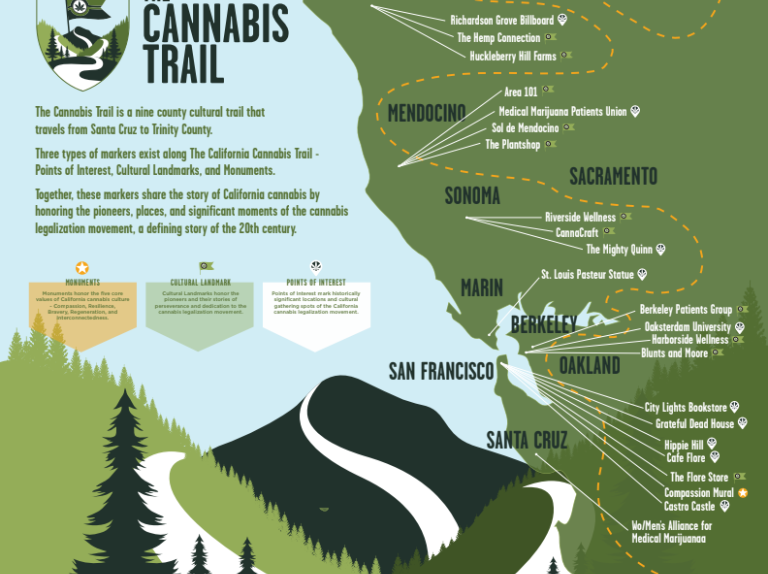
When destinations face complex, emerging sectors, traditional strategies fall short. This article introduces single-domain destination stewardship—an approach to building foundational intelligence and alignment—illustrated through California’s award-winning Cannabis Trail cooperative program.
What happens when a destination organization must integrate a complex, emerging, and often misunderstood sector into its narrative and visitor economy?
What happens when that sector carries layered policy, conflicting narratives, and deeply rooted public perception—both positive and negative?
And what happens when there is no clear playbook?
In these moments, destination organizations are not simply promoting a place—they are navigating complexity.
And in navigating that complexity, a new capability begins to emerge: single-domain destination stewardship.
From Promotion to Navigation
Traditional destination strategies are built for clarity—established industries, known audiences, and predictable messaging.
But emerging sectors introduce something different:
- Fragmented policy environments
- Misaligned narratives
- Limited shared understanding
- Heightened stakeholder sensitivity
This creates a challenge that cannot be solved through marketing alone.
It requires building a foundational intelligence base—a structured understanding of a specific domain that allows destinations to communicate clearly, align stakeholders and make informed decisions.
Defining Single-Domain Destination Stewardship
Single-domain destination stewardship is the process of developing focused intelligence, shared language, and stakeholder alignment within a specific, complex sector that impacts the visitor economy.
It is most relevant when a sector is:
- Emerging or rapidly evolving
- Policy-sensitive or highly regulated
- Culturally nuanced or misunderstood
- Economically significant but not yet fully integrated
Rather than beginning with promotion, this approach begins with understanding.
From that foundation, destinations can move toward alignment, partnership, and ultimately, effective storytelling.
Case Study: California’s Cannabis Trail Cooperative Marketing Program
Cannabis provides one of the clearest real-world examples of this dynamic.
As an industry emerging from prohibition—with overlapping hemp and cannabis narratives, evolving regulation, and persistent stigma—it presents both complexity and opportunity for destination organizations.
In California, three destinations—Visit Oakland, Visit Mendocino County, and Humboldt County Visitors Bureau—each took an important first step independently:
They invested in building their own local single-domain intelligence set. A destination stewardship baseline.
This included:
- Developing a grounded understanding of the cannabis travel audience
- Mapping how cannabis fits within their local experience economy
- Aligning the topic with their destination brand and community context
- Establishing internal clarity before external messaging
Each destination approached this work through its own lens:
- Oakland as a gateway urban market with experiential lounges and important War on Drugs history, stories elevated and integrated with arts & culture through the Oakland Cannabis Trail.
- Mendocino County as a boutique small craft cannabis farm cultivation region and cultural capital within the famed Emerald Triangle.
- Humboldt County as the amazon of cannabis genetics and back-to-the-land homesteading history, a globally famous cannabis destination within the famed Emerald Triangle region.
Only after this local foundation was established did a larger opportunity become visible.
Because each destination had invested in its own intellectual capital, a complementary regional narrative emerged:
A visitor journey beginning in an urban gateway and extending into Northern California’s culturally rich cannabis cultivation regions—anchored in place, history, and authenticity.
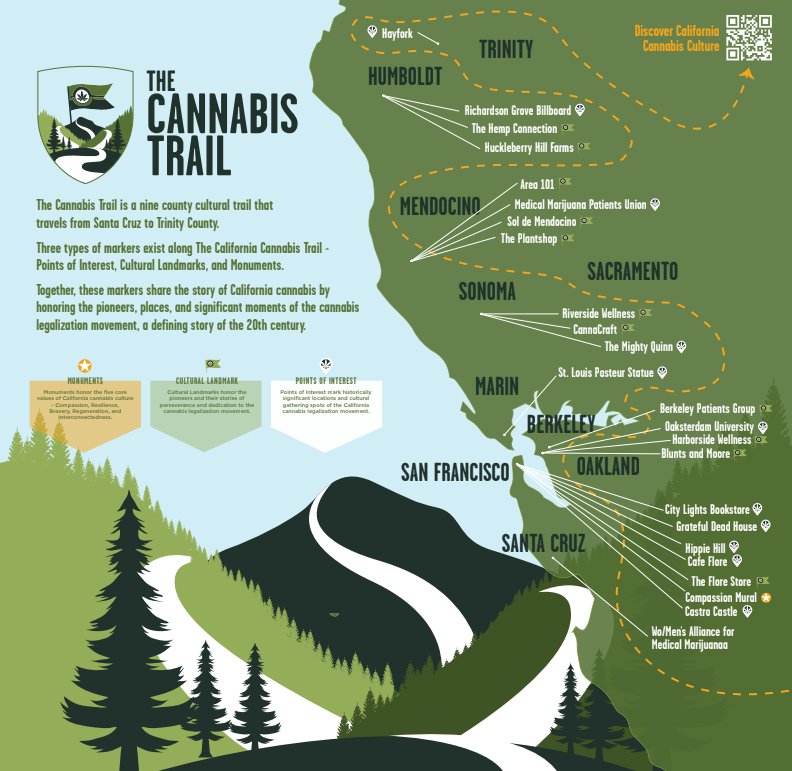
From this foundation, the “Travel the Cannabis Trail” Cooperative Program launched in January 2024 as the first-of-its-kind initiative.
The program was designed as a seasonal, fall harvest campaign, strategically focused on September and October to:
- Drive visitation during a shoulder season
- Increase hotel occupancy and length of stay
- Highlight the cultural and agricultural significance of harvest
Execution included a gamified passport experience connecting nine interactive cultural landmarks across the participating destinations, encouraging visitors to follow curated itineraries and engage with local stories.
Because alignment had already been established at the local level, the cooperative effort was able to move efficiently into coordinated activation with:
- Shared audience targeting
- Consistent narrative framing
- Brand-aligned regional storytelling across destinations
The results demonstrate the impact of an intelligence-first approach:
- 212 million+ audience reach
- $480,000+ in earned media value
- Attraction of The Emerald Cup event to Oakland
- Nearly $500,000 in lodging revenue generated from that event alone
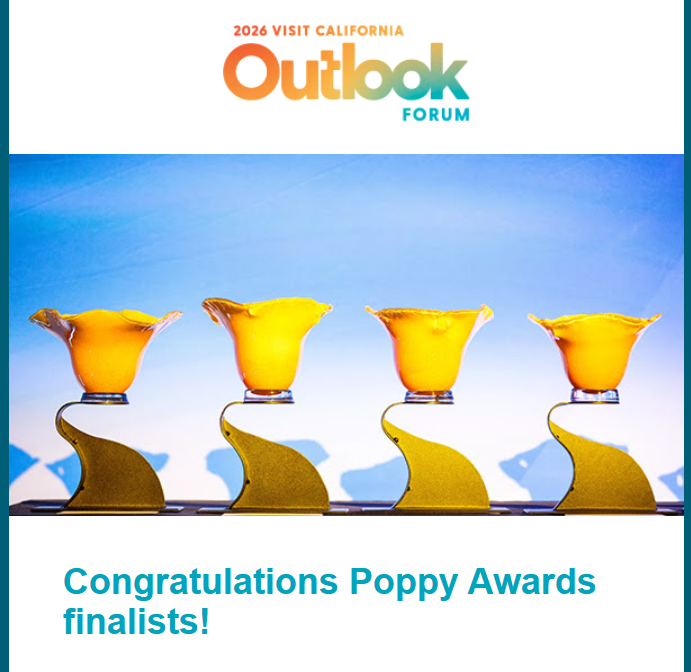
The program was recognized with a Poppy Award from Visit California in the “Best Strategic Partnership” category, acknowledging excellence in collaborative destination marketing and regional stewardship.
More importantly, the participating destinations are now positioned for the next phase of industry evolution, including the rollout of the Cannabis Appellations of California by the California Department of Food and Agriculture, further connecting place, product and identity.
This outcome did not begin with marketing.
It began with local understanding, followed by regional alignment, and then coordinated activation.
A Transferable Model for Complex Sectors
While cannabis is a distinct example, the underlying model applies broadly.
Destinations are increasingly navigating sectors such as:
- Short-term rental regulation and housing pressure
- AI, robotics, and emerging visitor technologies
- Climate adaptation and environmental stewardship
- Cultural tourism with layered community sensitivities
In each case, the challenge is not simply promotion—it is interpretation and alignment.
Single-domain destination stewardship provides a structured way to approach that work.
From Intelligence to Influence
One of the most important outcomes of this approach is its impact on advocacy.
When destinations build a coherent understanding of complex sectors:
- Communication with policymakers becomes clearer
- Boards and stakeholders can advocate with confidence
- Resident conversations shift from uncertainty to informed dialogue
In complex environments, those who can organize information and create shared understanding often shape outcomes.
Clarity builds trust—and trust builds influence.
Practical Steps for Destination Organizations
To begin applying this approach:
1. Identify Complexity Early
Recognize sectors that are emerging, misunderstood, experiencing transition, or highly sensitive.
2. Invest in Local Understanding First
Build a destination-specific intelligence base before attempting broader campaigns.
3. Create Shared Language
Align internal teams and external stakeholders around consistent framing.
4. Look for Regional Complementarity
Once local clarity exists, identify where collaboration can extend the story.
5. Sequence Strategy Intentionally
Understanding → Alignment → Partnership → Activation.
A Final Thought
Every destination will face moments where complexity outpaces clarity.
These moments are often viewed as risks.
But they are also opportunities.
The destinations that lead will not be those that move fastest to market.
They will be the ones that take the time to understand, align, and build from a foundation of intelligence.
Because in complex environments, stewardship is not a constraint.
It is a capability.

Brian Applegarth is the founder of Applegarth Intelligence, a research and interpretive intelligence firm focused on destination stewardship, visitor economy systems, and community vitality. He led the Cannabis & Hemp Task Force for Destinations International and is the author of Learning Under Pressure.
Share Your Expertise
Want Your Organization Featured Next?
The article you just read was written by someone like you. Submit a blog, case study or social media feature and get your organization's story in front of the DI community.
Join 50+ destination leaders who've shared their stories on the DI Blog